Mon to Fri - 8:30am to 5pm


Rooftop bars are one of the most commercially valuable assets in modern hospitality. When furnished correctly, they extend usable venue space across all seasons, attract footfall from outside the existing customer base, and increase average dwell time, all of which directly improve revenue per cover.
This guide explains exactly how to furnish a rooftop bar, covering layout planning, furniture selection, weatherproofing, and the finishing details that separate a memorable outdoor space from a forgettable one.
What Makes a Rooftop Bar Successful?
A well-designed rooftop bar delivers several measurable advantages over standard indoor-only venues:
- Extended capacity across multiple guest groups simultaneously
- Year-round usability when equipped with shelter, heating, and weather screening
- Strong street-level visual impact that drives organic footfall
- Higher spend per visit as guests stay longer in comfortable, well-designed environments
Venues without outdoor space increasingly struggle to compete. A rooftop bar, furnished thoughtfully, closes that gap and creates a genuine point of difference.
Step 1: Define Your Style and Concept
Before selecting a single piece of furniture, establish the visual identity of the space. The ambience of a rooftop bar shapes whether guests return, recommend the venue, and spend more per visit.
Consider two things: what your existing guests expect, and what kind of new audience you want to attract. It is often commercially wise to give a rooftop bar its own distinct identity, separate from the interior, so it functions as a destination in its own right rather than simply an overflow area.
Common rooftop bar styles include:
- Contemporary urban using metal poseur sets, clean lines, and minimal colour palettes
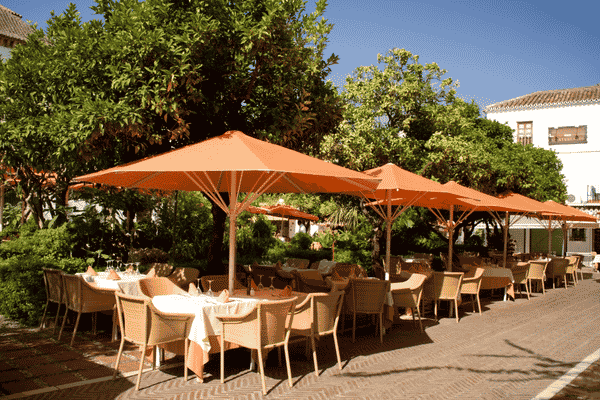
- Mediterranean or relaxed resort using rattan furniture, warm tones, and natural textures
- Industrial rooftop using reclaimed materials, exposed steel, and statement lighting
- Upscale lounge using modular sofa sets, planting, and premium fabrics
Whatever style you choose, consistency across furniture, lighting, and accessories is what creates atmosphere rather than just a collection of outdoor pieces.
Step 2: Plan a Flexible and Inclusive Layout
Layout planning determines how many guests you can accommodate, how comfortably they can move through the space, and whether the area meets safety requirements for an elevated outdoor setting.
Key layout considerations include:
- Zoning to separate dining, drinking, and lounge areas
- Barrier and screen placement using glass balustrades or adjustable parapet screens to define edges, create shelter from wind, and meet building regulations
- Accessibility to ensure the space is inclusive for all guests, including those with mobility considerations
- Flow between the interior and the rooftop so staff can operate efficiently during busy periods
Modular and stackable furniture is particularly useful in rooftop environments where the layout may need to flex between a daytime casual offer and an evening seated dining or events format.
Step 3: Select Furniture Built for Outdoor Conditions
Rooftop furniture faces more demanding conditions than standard garden furniture. Elevated exposure means higher wind, greater UV intensity, and more direct rain. Furniture must be chosen with this in mind.
Seating and tables
For contemporary rooftop bars, metal poseur sets provide durability and a modern aesthetic well-suited to high-footfall environments. For venues with a more relaxed or timeless feel, rattan sets offer both visual warmth and practicality, particularly where guests are expected to spend extended time in the space.
Sofa sets and modular lounge furniture are well-suited to rooftop areas designed around a cocktail or social drinking offer, where comfort and group seating are priorities over table turnover.
Shade and shelter
Every rooftop bar requires shade and shelter structures. Parasols, pergolas, and canopies protect guests from sun and rain, extending usability across a wider range of weather conditions. In the UK climate in particular, shade and shelter is not optional as it is the difference between a rooftop bar that operates 12 months a year and one that sits empty from October to April.
Heating
Patio heaters are essential for any venue aiming to trade outdoors through autumn and winter. Overhead infrared heaters are particularly effective in rooftop environments where wind would quickly dissipate the heat from freestanding models.
Lighting
LED lighting extends trading hours and significantly affects the atmosphere after dark. Warm-toned LED strips, festoon lighting, and uplighting used in combination can transform a functional rooftop into a premium evening destination.
Step 4: Add the Practical Finishing Details
The details that guests rarely consciously notice are often the ones that determine whether they feel comfortable enough to stay longer and return.
Essential finishing elements for any rooftop bar include:
- Seat pads and cushions to improve comfort on metal or rattan furniture
- Litter bins positioned discreetly but accessibly throughout the space
- Cigarette bins to manage smoking guests without creating litter issues
- Planters and greenery to soften hard surfaces and add visual depth
- Signage and menus integrated with the overall aesthetic rather than added as an afterthought
Furnishing a rooftop bar is an investment that, when planned carefully, delivers measurable returns through increased capacity, higher dwell time, and a stronger competitive position in your local market. The right furniture, shelter, heating, and finishing touches are what turn an underused rooftop into a year-round revenue asset. Click here to explore our collection.

 27 August 2026